


In Their Language
An inclusive study that set out to understand the barriers to cervical screening for ethnic minorities.
One in five ethnic minority women has never attended a cervical screening appointment
80%
The rate at which cervical HPV screening has reduced cervical cancer deaths in recent decades.
Source1 in 4
Minority women say they'd be more comfortable doing an at-home test.
30%
Of minority women report that they are not currently up to date with screening recommendations.
The Study
We launched the ‘In Their Language’ campaign to understand how cultural attitudes, practical barriers, and shortcomings in healthcare provision may be preventing many people AFAB (assigned female at birth) from ethnic minority backgrounds from attending potentially life-saving NHS cervical screening appointments.
We surveyed 1,024 ethnic minority women across the UK* to address a longstanding evidence gap in cervical screening research. While previous studies have typically focused on White populations or examined individual minority groups in isolation, we were passionate about building a broader understanding of the barriers affecting women from diverse ethnic communities nationwide. By capturing experiences across a wide range of backgrounds, our research provides a vital picture of the factors influencing cervical screening uptake in the UK.


Our findings
Cervical screening uptake was a key area of focus in our research, helping to understand whether barriers to attendance disproportionately affect minority, ethnic women. We sought to identify which groups are most and least likely to attend when invited.
Rates of cervical screening by ethnic group
Highest attendance – always attends when invited:
- Black – Caribbean: 68.57%
- Black – African: 63.89%
- Mixed-race – White and Black African: 60.58%
- White – Roma: 57.02%
- Asian – Chinese: 54.55%
Has not attended, despite being invited:
- Mixed-race – Any other mixed-race background: 13.33%
- Asian – Pakistani: 12.68%
- Black – Caribbean: 11.43%
- Asian – Indian: 8.04%
- Asian – Bangladeshi: 5.71%
Do minority women feel confident talking about intimate health in their communities?
Our survey found that while the majority (60%) of ethnic minority women say intimate health is openly discussed within their communities, significant pockets of stigma remain.
Women from Pakistani (31%), Black Caribbean (29%), Bangladeshi (29%), and Black African (25%) backgrounds were among the most likely to say intimate health is not openly discussed in their communities, potentially creating barriers to awareness, prevention, and healthcare engagement.
Understanding the barriers between minority women and preventive cancer care
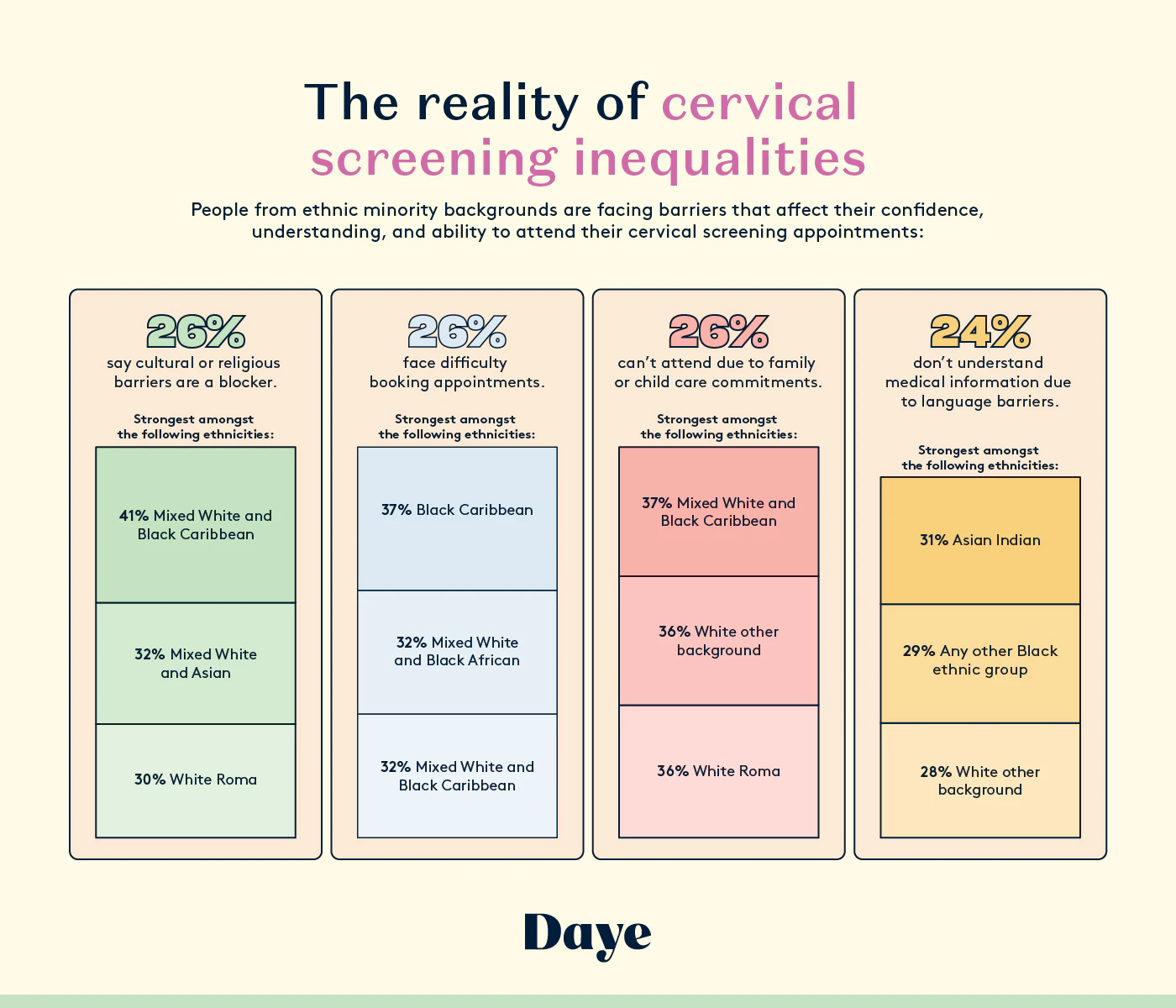
Understanding the barriers ethnic minority women face is crucial to improving uptake. Our survey revealed that these challenges are driven by a combination of cultural and religious concerns, alongside practical issues such as access to services, family responsibilities, and language.
Barriers to screening by region
Cultural barriers and modesty concerns
- Religious beliefs play a particularly significant role in healthcare decision-making in the East of England (69%), the North East (65%), and Northern Ireland (64%).
- Across the UK, modesty emerged as the most common religion-related barrier to screening attendance, cited by women in Yorkshire (80%), the East of England (77%), and the East Midlands (73%).
Booking appointments remains a major access challenge
Access challenges are most severe in Wales (35%), Scotland (33%), and the South East (33%).
Family and childcare responsibilities
Regionally, family and childcare responsibilities are most likely to affect women in Northern Ireland (39%), followed by the North West (32%) and Wales (32%).
Language and communication barriers remain widespread
The need for more accessible health communications is particularly evident in Northern Ireland (30%), the South West (30%), and the North West (29%).
Understanding how religion plays a role in intimate health
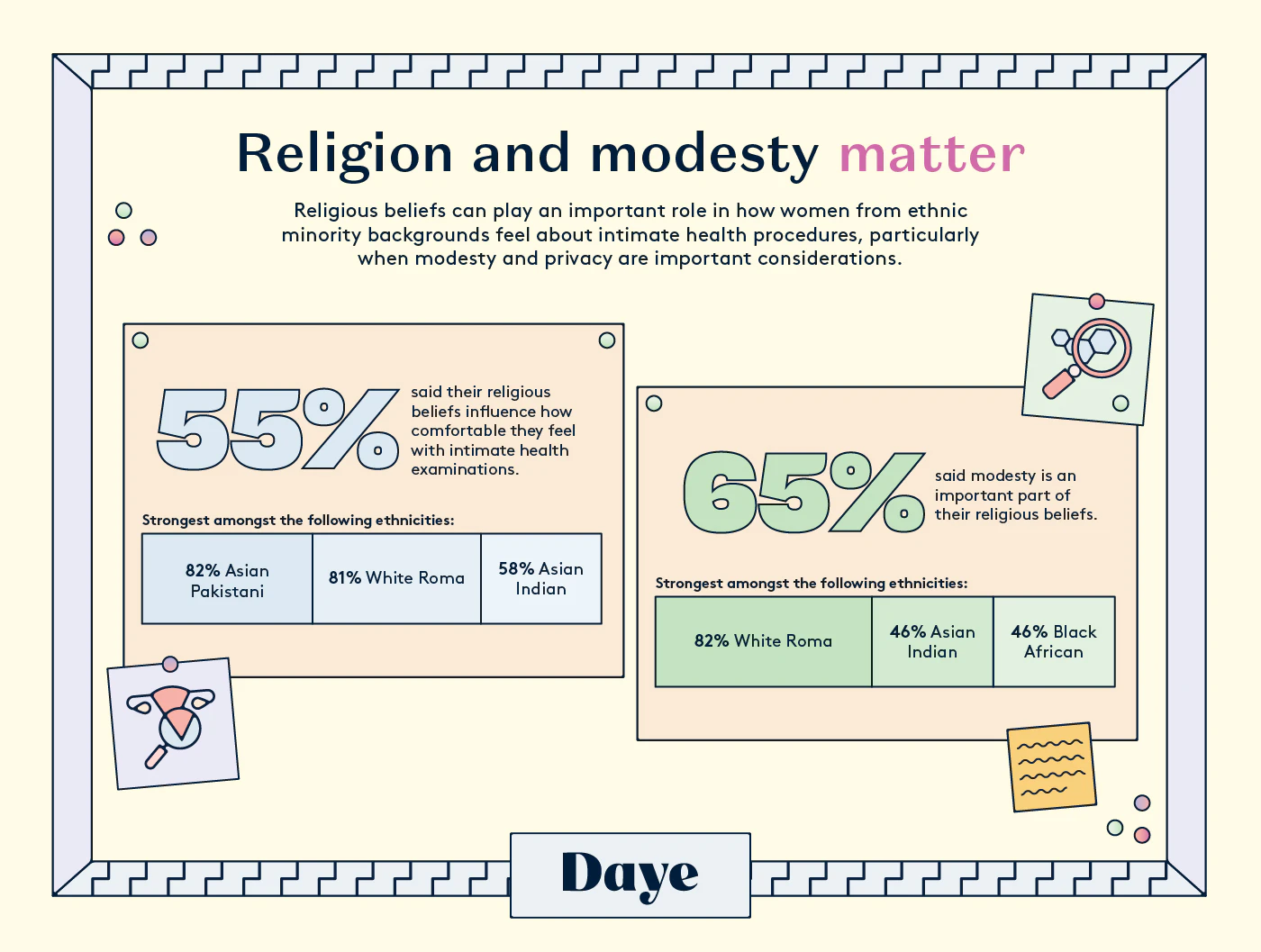
Religious beliefs and cultural values play an important role in shaping how comfortable many women feel about intimate health examinations, including cervical screening.
More than half of ethnic minority women (55%) say their religious beliefs influence how comfortable they feel with intimate health examinations, while nearly two-thirds (65%) say modesty is an important part of their religious beliefs.
What do minority women want from cervical screening?
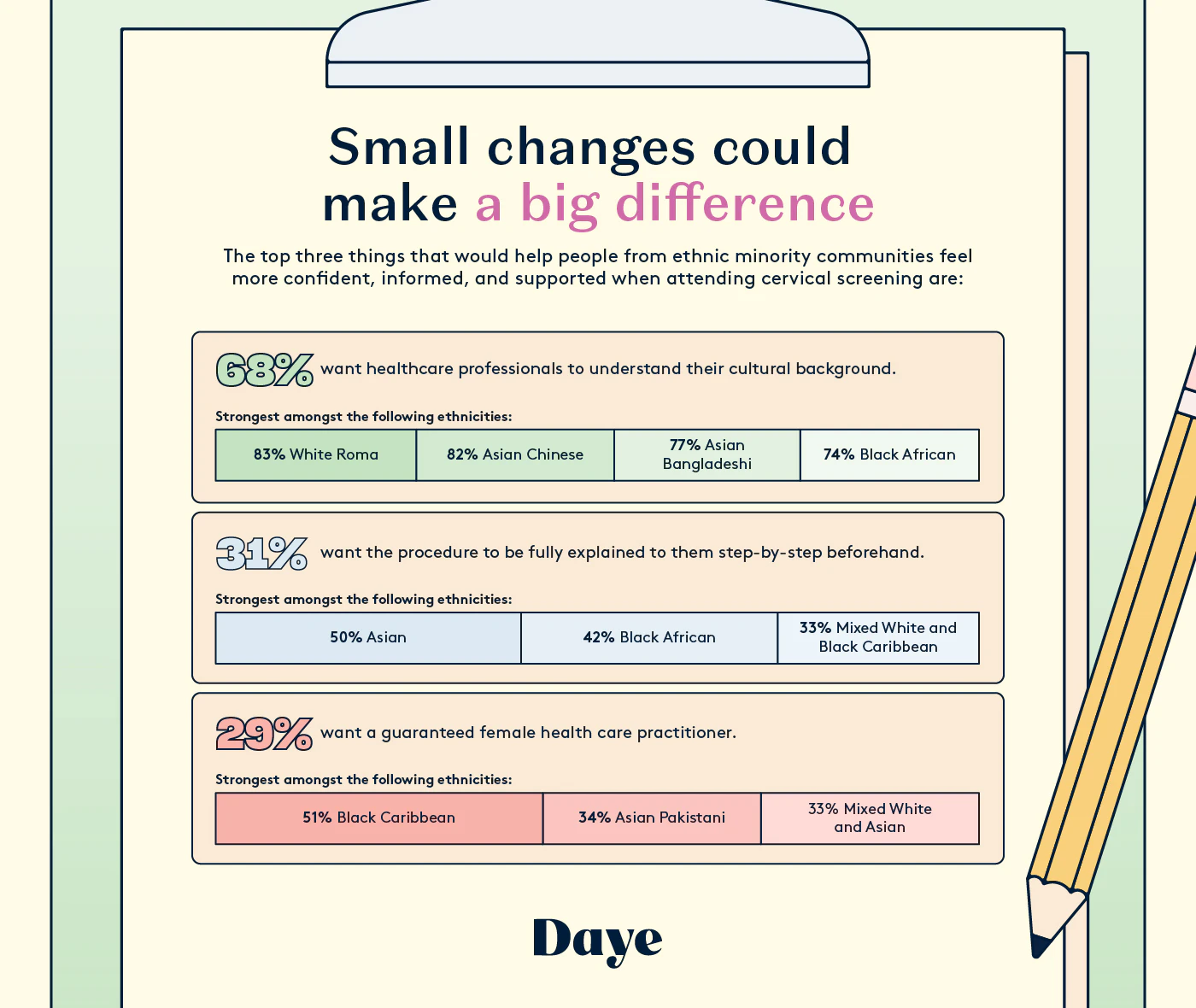
Clear communication, cultural understanding, and choice in care all play a significant role in improving comfort around cervical screening. Culturally aware healthcare professionals, step-by-step explanations, and access to female clinicians were all identified as game changers for minority groups.
A step-by-step timeline of an NHS cervical smear test
Understanding what to expect is one of the simplest ways to reduce anxiety around cervical screening. With our results showing that a third of women would feel more comfortable going into the procedure if it had been explained to them step-by-step to them beforehand, we’ve created this helpful timeline.
You'll receive your smear test invitation by text, post, or via the NHS app
When booking your appointment, you can ask for a female healthcare professional, an interpreter, a chaperone, and extra time if you have questions or concerns.

The clinician will explain the procedure
The appointment usually takes around 10–15 minutes. The healthcare professional will explain what’s about to happen and answer any questions you may have before the examination begins. If you are worried about discomfort, you can ask for a smaller speculum, additional lubricant, more time during the examination, slower insertion, breathwork methods to stay calm, and/or an at-home HPV screen like Daye’s Diagnostic Tampon.

You will take off clothing from the waist down
You will be asked to undress from the waist down behind a privacy curtain. You may be offered a paper sheet or cover to help you feel more comfortable. The healthcare professional will then leave you in private while you undress and get dressed.

The clinician will do your smear test
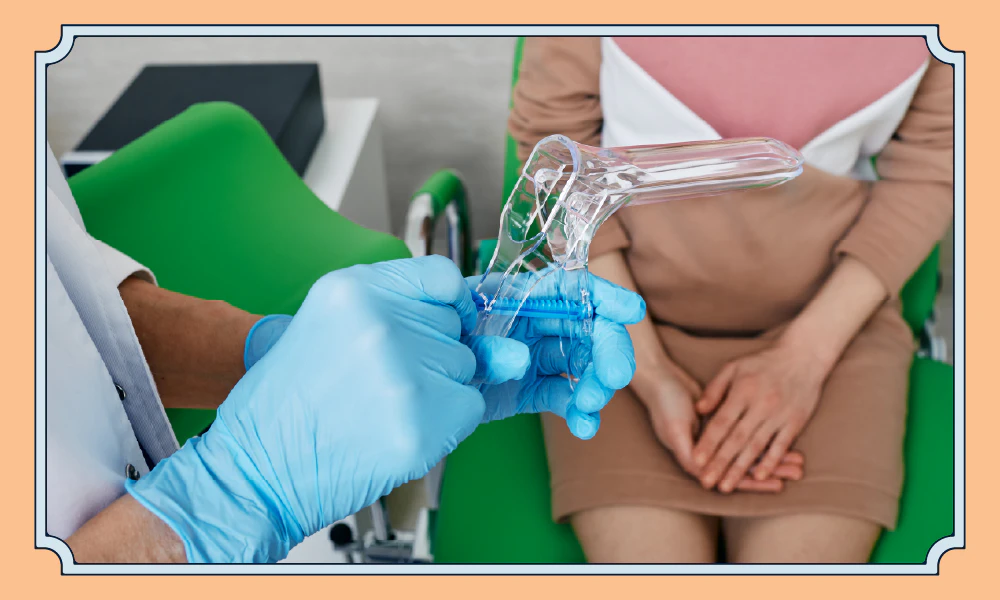
A clinician will gently insert a speculum to open the vagina and access the cervix. A soft brush is then used to collect a small sample of cells from the cervix. The procedure is quick and sometimes a little painful. It usually takes less than a minute. Once the sample has been taken, the speculum is removed, and you'll have privacy to wipe, freshen up, and get dressed in your own time.
You will receive results by text, letter, or via the NHS app
They may take several weeks to arrive.

Downloadable Resources
Because information is only useful if you can access it, we've created free, downloadable resources in multiple languages - designed to help more people understand what to expect, why screening matters, and how to feel prepared before their appointment.
Download the translated guides below and share them with anyone who needs them:
• Gujarati • Hindi • Arabic • Bengali • Urdu • Punjabi • Swahili • Somali • Polish • English
Inclusive, representative research is key to understanding the cultural, practical, and communication challenges that shape attendance and to informing more effective action from healthcare professionals, policymakers, and public health bodies.
Ultimately, cervical cancer prevention will only succeed if screening programmes are designed to work for everyone, and if responsibility for overcoming barriers sits with the system, not with the women most affected.
For those who want to understand their HPV status before or between NHS appointments, Daye's at-home HPV Screen offers a private, non-invasive option - using a familiar tampon-based format you can use in your own time, at home. It works alongside NHS cervical screening, not in place of it.
Methodology: *Daye used Census Wide to survey 1,024 women from ethnic minorities